
The workflow
The analog experience:
For a few years now, I’ve been reconnecting with the analog world after years of reneging on it, embracing the digital world wholeheartedly. But the younger photographers falling in love with film kind of convinced me that maybe it was a worthwhile experiment. After all, I’ve still got my old Nikon FM with a 50mm in working order. Why not? Those experiences were slightly less satisfying than expected, mostly because my old camera isn’t that good and a bit clunky, truth be told. Especially when in my regular photography, I work with a very nice Leica, which can reproduce the analog experience without the cost and wait of analog photography.
Still, what if I had a good camera? And so I borrowed my friend Jean Bruneau’s old Leica M4-2 for a week. And the clunkiness disappeared.
If you don’t know the M4-2, it is a very mechanical camera made in Canada in the late 70s. Like all Leica Ms, it takes those wonderful lenses and uses the rangefinder system that they’ve been used since the 1950s. If you know how to use one Leica M, you know how to use all of them.
I can’t really explain the giddiness of loading film into a Leica, the tactile satisfaction, the sound of the shutter, and the crank. It’s very satisfying.
It doesn’t have a meter, and so you have to truly be aware of the light and the world around you. Using an iPhone app to meter the light, I tried to keep in mind the balance between light and shadow. It changes your approach to any and all pictures. You think more. The cliché of “it slows you down” is very real.
After the first roll of film, a Kodak Color 200, I was in trouble. Should I find myself an old Leica? It was so much fun. I was reconnecting with my younger self. Usually, when I do my little annual analog tryout, that roll of film can last 2-3 weeks. With this last roll of 36 exposures, it lasted 2 days! Something was happening.
Before I even finished that roll, I bought another, this time a black-and-white film Kentmere 200. This one calmed down my enthusiasm. I found myself wishing I had a colour film in the camera. I felt the weight of the constraints of film. I realized I was improvising less than I would were it a digital camera. Everything had to be film-worthy. By the end of the week, I had saved myself thousands of dollars, I wasn’t buying one. Especially with my style of editing and processing, which is so reminiscent of film anyway, and since my camera is also very much a tactile experience, compared to say a Sony camera. No shutter sound or feel of winding film is worth thousands. But it was fun. Thanks, Jean! Maybe I’ll get one of those when I’m independently wealthy. //
Depuis quelques années, je me reconnecte avec le monde analogique après l’avoir délaissé au profit du numérique, que j’ai embrassé à bras ouverts. Mais les jeunes photographes tombant amoureux de la pellicule m’ont un peu convaincu que cela valait peut-être la peine d’essayer. Après tout, j’ai toujours mon vieux Nikon FM avec un 50mm en état de marche. Pourquoi pas? Ces expériences se sont révélées un peu moins satisfaisantes que prévu, surtout parce que mon vieux boîtier n’est pas très bon et un peu encombrant, à vrai dire. Surtout que, dans ma pratique habituelle de la photo, j’utilise un très beau Leica, qui peut reproduire l’expérience analogique sans le coût et l’attente de la photographie argentique.
Mais si j’avais un bon appareil? J’ai donc emprunté le vieux Leica M4-2 de mon ami Jean Bruneau pendant une semaine. Et toute la lourdeur avait disparu.
Si vous ne connaissez pas le M4-2, c’est un appareil très mécanique fabriqué au Canada à la fin des années 70. Comme tous les Leica M, il accepte ces merveilleux objectifs et utilise le système de télémètre qu’ils emploient depuis les années 50. Si vous savez utiliser un Leica M, vous savez tous les utiliser.
Je ne peux pas vraiment expliquer l’excitation de charger une pellicule dans un Leica, la satisfaction tactile, le son de l’obturateur et de l’armement. C’est très satisfaisant.
Il n’a pas de posemètre, et donc il faut vraiment être conscient de la lumière et du monde qui nous entoure. En utilisant une application iPhone pour mesurer la lumière, j’ai essayé de garder à l’esprit l’équilibre entre la lumière et l’ombre. Cela change votre approche de toutes les photos. On réfléchit davantage. Le cliché « ça vous ralentit » est très réel.
Après la première pellicule, une Kodak Color 200, j’étais en difficulté. Devrais-je me trouver un vieux Leica ? C’était tellement amusant. Je renouais avec mon moi plus jeune. Habituellement, quand je fais mon petit essai annuel en argentique, cette pellicule peut durer 2 à 3 semaines. Avec cette dernière pellicule de 36 poses, elle a duré 2 jours ! Il se passait quelque chose.
Avant même d’avoir terminé cette pellicule, j’en ai acheté une autre, cette fois une pellicule noir et blanc Kentmere 200. Celle-ci a calmé mon enthousiasme. Je me suis surpris à souhaiter avoir une pellicule couleur dans l’appareil. J’ai senti le poids des contraintes de l’argentique. J’ai réalisé que j’improvisais moins que je ne l’aurais fait avec un appareil numérique. Chaque photo devait en valoir la peine. À la fin de la semaine, je m’étais économisé des milliers de dollars, je n’en achetais pas un. Surtout avec mon style d’édition et de traitement, qui rappelle tellement l’argentique de toute façon, et puisque mon appareil est aussi une expérience très tactile, comparé, par exemple, à un appareil Sony. Aucun son d’obturateur ou sensation d’avancer la pellicule ne vaut des milliers. Mais c’était amusant. Merci, Jean ! Peut-être que j’en achèterai un quand je serai riche.
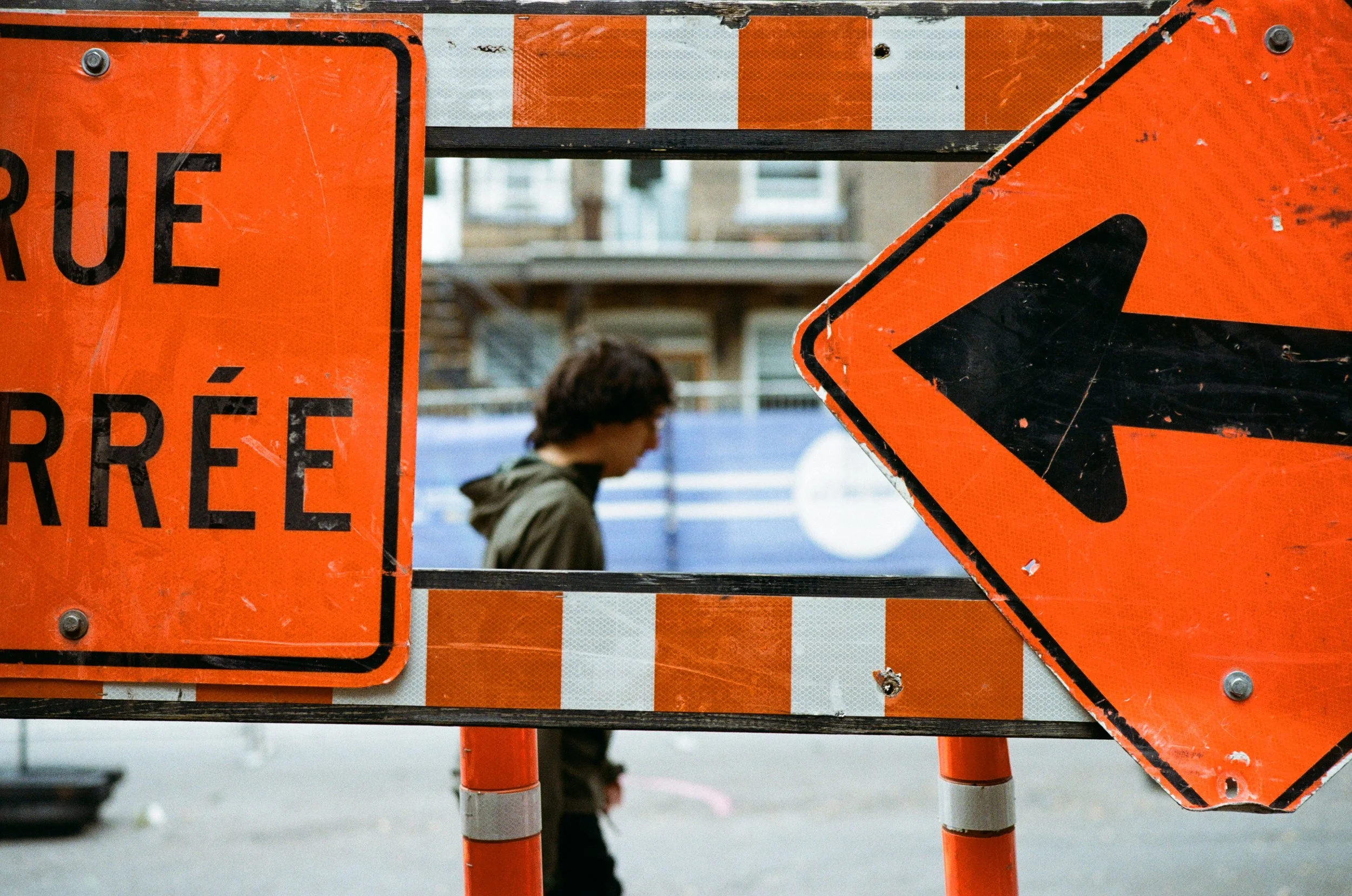
50mm f/1.5 Voightlander nokton: Kodak Color 200
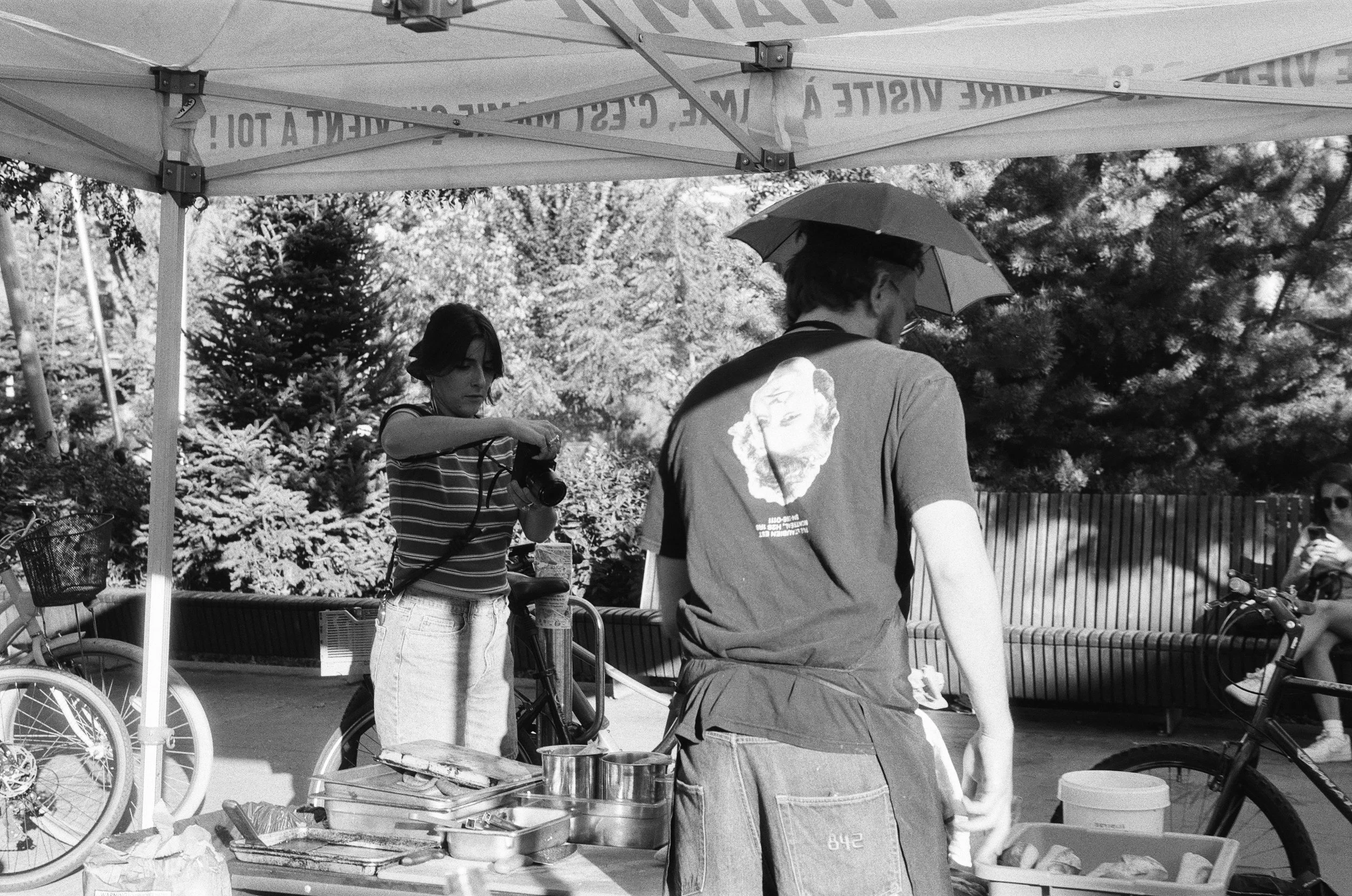
Leica 35mm summicron: Kentmere 200
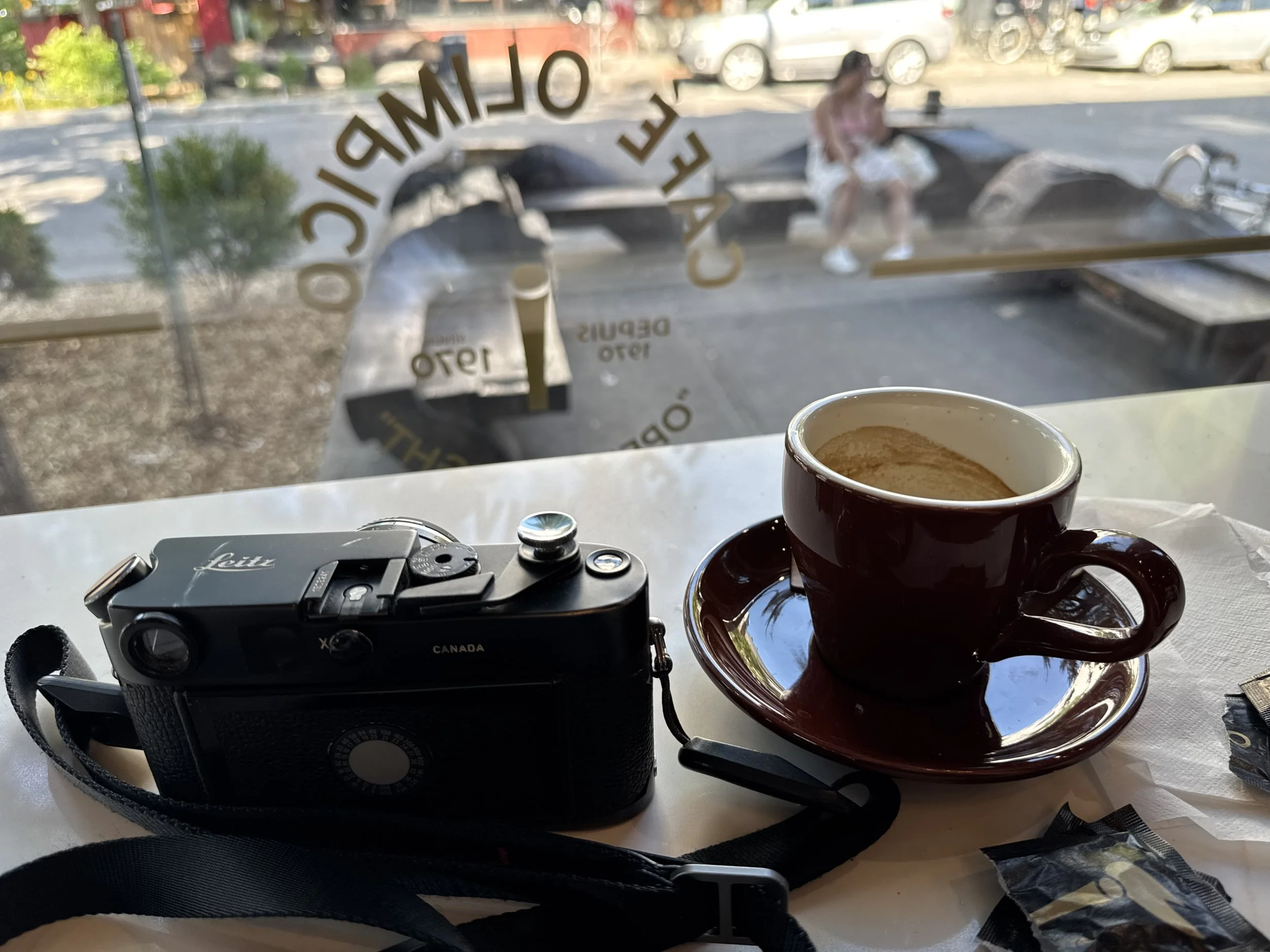
iPhone 5 pro camera